Updated Sept 2026
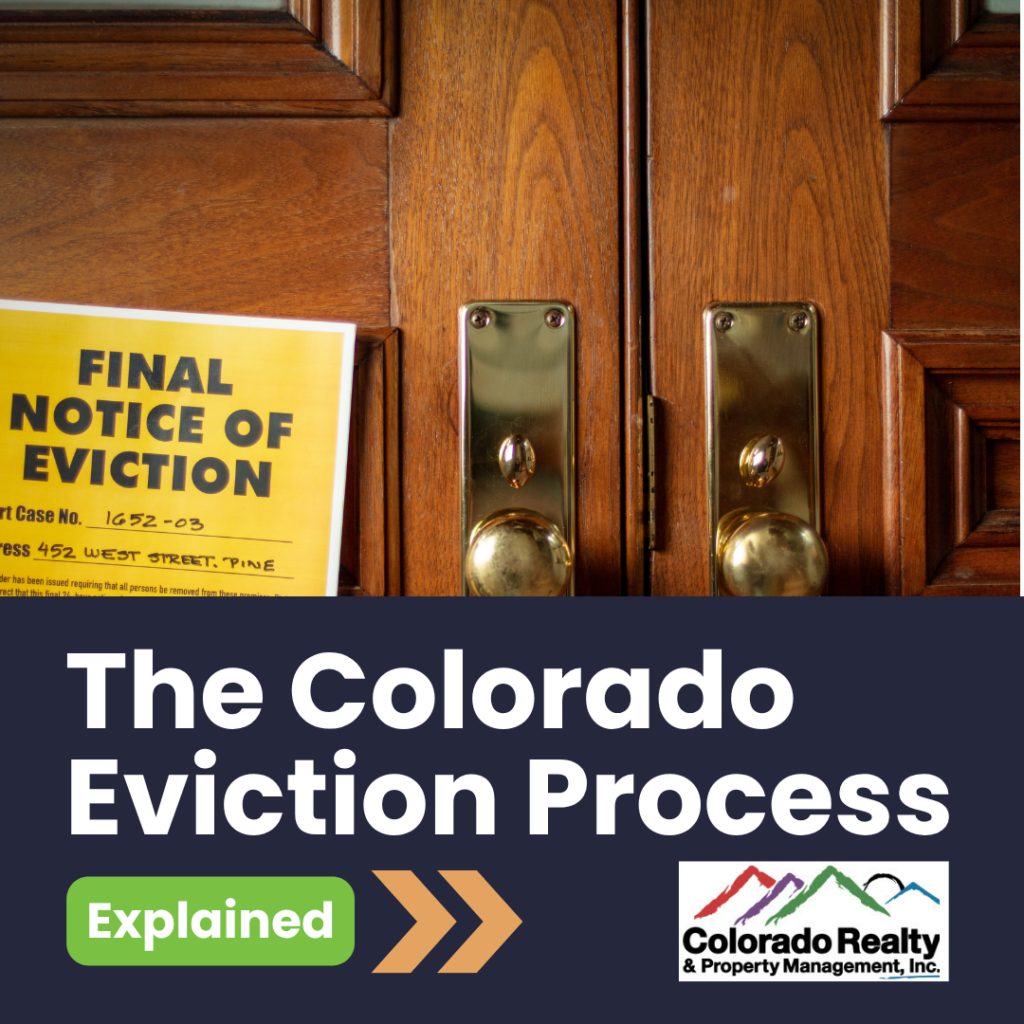
As a landlord, your hope is to bring on high-quality tenants who abide by the lease and pay rent on time each month. You might be surprised at how likely it is that you could find yourself going through the eviction process at some point in your tenure.
Eviction is more common than most landlords expect, and it’s a process worth understanding well before you ever need it. Our goal is to provide landlords with the resources and legal information necessary to operate their properties in a lawful manner. Today, we’re going to look at how the eviction process works in Colorado.
What Is an Eviction?
Eviction doesn’t just refer to the process of removing a tenant from your property. It’s a legal process that involves proper notice, court filings, and, ultimately, law enforcement, not something a landlord can carry out on their own.
Since the eviction process is a legal one, it’s important that landlords have legal grounds to file before beginning. Colorado requires landlords to have just cause to end a tenancy under HB24-1098, the state’s “just cause” eviction law. Qualifying reasons include nonpayment of rent, a lease violation, or a no-fault reason such as the owner moving in or selling the property. Prolonged failure to pay rent is one of the most common causes of eviction, though severe property damage and other lease violations can also qualify.
How Can You Avoid Eviction?
The eviction process is a costly one. An uncontested eviction in Colorado typically runs a few hundred dollars in filing and sheriff fees, but a contested case with an attorney can easily run $1,500 to $3,500 or more, on top of the rent you’re losing while the process plays out.
Properly screening tenants before signing a lease, running background and credit checks, and checking references costs far less than an eviction. If you’re not already screening your tenants thoroughly, it’s one of the highest-return habits you can build as a landlord.
How Long Does the Eviction Process Take in Colorado?
A straightforward, uncontested eviction in Colorado usually takes three to six weeks from the first notice to the sheriff lockout. Contested cases, where the tenant disputes the eviction in court, can stretch to a few months depending on the court’s schedule and how the case unfolds.
There are also circumstances that can lengthen the process or bring it to a halt entirely, which we’ll cover below.
What Steps Are Involved in the Eviction Process?
Let’s look at the steps involved in a Colorado eviction.
Step 1: Serving the Notice
Evictions don’t start and stop with removing a tenant from the property. The process requires that you give the tenant a chance to fix the issue before moving toward removal.
Most Colorado evictions begin with a 10-day Demand for Compliance or Possession. This notice informs the tenant of the specific issue, whether that’s unpaid rent or a lease violation, and gives them 10 days to pay or comply, or vacate the property. Other situations, like a substantial or criminal violation, may call for shorter 3-day notice with no opportunity to cure.
You can post the notice on the door of the property, but we highly recommend also sending a copy by certified mail, so you have a clear legal record of when it was delivered.
Step 2: Filing With the Court if the Tenant Doesn’t Comply
If the tenant complies with the notice within the required window, the eviction process comes to a halt. If they don’t, it’s time to file with the court.
This starts with a Complaint that lays out the issue and the tenant’s failure to comply. The court then issues a Summons, which is delivered to the tenant, often through the county sheriff’s office, to bring the case to their attention. If the tenant contests the case, a hearing gets scheduled. If they don’t respond, the landlord can typically get a judgment by default.
Step 3: Removing the Tenant
Once the court awards you possession, it’s time for the tenant to vacate. The tenant usually gets a short window, often 48 hours, to leave voluntarily. Any harassment or intimidation on your end is unlawful, so maintain a professional demeanor throughout.
If the tenant still doesn’t leave, Colorado law requires you to get a Writ of Restitution from the court and schedule a sheriff lockout. Self-help evictions, changing the locks, shutting off utilities, or removing a tenant’s belongings yourself, are illegal in Colorado. Only the sheriff can lawfully remove a tenant from the property and doing it yourself can expose you to real liability.
Colorado law also sets rules for handling any belongings left behind. Landlords generally need to store abandoned items for a set period and provide written notice before disposing of anything, so check the current requirements before clearing a unit.
Factors That Can Affect the Eviction Process
Each eviction comes with its own set of challenges, but a few scenarios tend to come up more often than others:
- Tenant compliance with the notice, which brings the eviction process to a halt.
- A landlord accepting full or partial rent after filing, which can sometimes reset or terminate the eviction process.
- A tenant declaring bankruptcy, which pauses the eviction process until the bankruptcy proceedings are resolved.
The best way to avoid the entire process, of course, is to screen your tenants thoroughly before signing a lease with them.
Navigate the Eviction Process Within the Constraints of the Law
No landlord looks forward to the eviction process. If you find yourself dealing with a tenant who’s living in violation of the lease, make sure you navigate the process within the constraints of Colorado law every step of the way.
Managing property isn’t always easy, and the legal side of evictions is exactly the kind of thing a property management company can take off your plate. Please contact us if you’d like more information on evictions or how we can help.


