Updated November 2026
Disclaimer: We are not attorneys and we are not giving legal advice. For legal advice or questions, please contact an attorney.
The Most Expensive Thing a Denver Landlord Can Say: “It Can Wait”
Every fall, Denver-area landlords make one of two choices. Some schedule their furnace tune-up early, clear their gutters before the first freeze, and get their roofs inspected while the weather cooperates. Others wait, because nothing is obviously broken, schedules are busy, and maintenance feels like an expense that can be pushed to next month.
By January, the landlords in the second group are often paying for it, not just in repair bills but in contractor wait times, tenant complaints, and small problems that turned into big ones.
Planning ahead is not about scaring anyone. It is about doing the inexpensive work while it is still inexpensive.
Why Reactive Maintenance Usually Costs More
A routine service call is planned, scheduled, and priced as routine. A failure in the middle of winter is urgent, often after hours, and often comes with secondary damage. Here is how that plays out on common items:
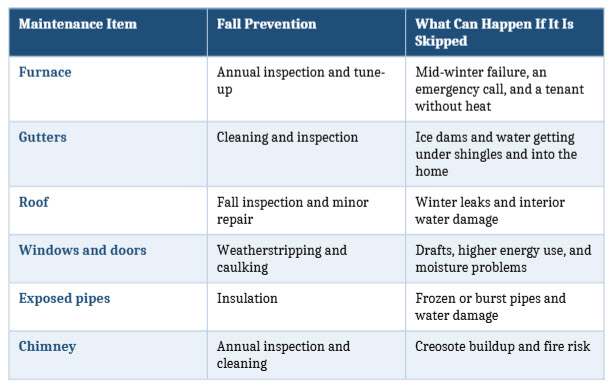
The pattern is the same every time. Prevention is a small, planned expense. Failure brings repair costs, possible damage to the property, and an unhappy tenant.
Why Timing Matters in Denver
Denver winters can bring hard freezes and sudden cold snaps, and the same weather that sends landlords looking for help sends everyone else looking too. A few things to keep in mind:
- Contractors get busy when the weather turns. HVAC, roofing, and gutter companies tend to fill their schedules once cold weather arrives, and emergency calls usually come at emergency rates.
- Some work depends on the weather. Many roofing, caulking, and concrete repairs are best done in milder temperatures, so a repair that is simple in early fall can be harder to do properly in the dead of winter.
- Exposed pipes are vulnerable. Pipes in garages, crawl spaces, and unheated areas can freeze during a hard cold snap if they are not insulated.
Maintenance and Tenant Retention
Emergency repairs cost more than parts and labor. They also affect your relationship with your tenant. A tenant who loses heat on a cold night because a furnace was never serviced is unlikely to forget it. They may finish the lease, but they may not renew.
Turnover has its own costs: lost rent while the home sits empty, cleaning and make-ready work, marketing, and screening a new tenant. Keeping a good tenant in a well-maintained home is almost always easier than starting over.
Your Top 5 Fall Priorities
If you only have time for a few things, start with these:
- Furnace or HVAC inspection and tune-up. Book early, since technicians fill up as the weather turns.
- Sprinkler system blowout. This needs to happen before a hard freeze to protect lines and components.
- Gutter cleaning and inspection. Clogged gutters contribute to ice dams.
- Roof inspection. Look for missing shingles, damaged flashing, and failing seals while repairs are still practical.
- Pipe and hose bib protection. Insulate exposed pipes, disconnect hoses, and make sure the main water shutoff is accessible.
For the complete checklist, including weatherstripping, detectors, chimney care, and tenant winter notices, see our guide to winterizing your Colorado rental home.
Why Proactive Landlords Hire Property Managers
The landlords who fall into reactive maintenance patterns usually are not careless. They are busy. They own multiple properties, they do not live near the rental, or they simply forget it is fall until it is winter.
This is one of the clearest reasons to work with a professional property management company. A good manager does not wait for you to remember. Seasonal maintenance is on the calendar every year, vendor relationships are already in place, and inspections happen whether or not you are thinking about them.
At Colorado Realty and Property Management, we coordinate seasonal maintenance for the homes we manage, and our 24/7 emergency line means tenant problems reach us, not your personal cell phone.
Frequently Asked Questions
When is the best time to schedule fall maintenance in Denver?
Early fall is ideal, before the weather turns and contractor schedules fill up. If you are past that point, schedule as soon as you can. Do not wait for a cold snap to remind you.
How much should I budget for rental property maintenance?
There is no single number that fits every property. Age, size, and condition all matter. A common practice is to set aside a maintenance reserve for each property so a surprise repair does not come out of nowhere. Your property manager or CPA can help you decide what makes sense for your situation.
Can I pass maintenance costs to my tenant?
It depends on what caused the problem and what your lease says. Colorado law requires landlords to keep rentals habitable, which includes working heat. Tenants may be responsible for damage they cause, depending on your lease and the circumstances. See our winterization guide for lease language to discuss with your attorney.
Is hiring a property manager worth it for maintenance coordination?
For many owners, yes. A property manager schedules seasonal service, uses established vendors, responds to after-hours problems, and handles tenant communication, which saves time and reduces the chance of a surprise. A free rental analysis is a good way to see what professional management could look like for your property.
Ready to Stop Managing Maintenance Reactively?
Colorado Realty and Property Management has managed Denver-area rental properties for over 20 years. We handle maintenance coordination, inspections, emergency response, and tenant communication so owners are not caught off guard by winter repair bills.
If you are self-managing and spending more time on maintenance than you would like, let’s talk. Start with a free rental analysis to see what your property could earn under professional management or call us at (303) 665-7368.


